The rise of longevity care in America, in numbers
In 2021, hardly anyone in the US searched for a longevity clinic. By 2026, Americans were searching for one 19 times as often, nearly half the clinics we could date had opened since 2020, and some of the best-known names in medicine and tech are putting money behind it. Here is the data behind the boom, including our own research on 237 clinics.

Key findings
- 19xUS searches for "longevity clinic" in 2026 compared with 2021. Searches for "longevity doctor" are up about 17 times.
- 45%of the clinics we could date opened in 2020 or later, across seven of the biggest US markets.
- 44%of clinics opened since 2020 are chain or franchise locations, up from 8% before. Chains are driving the recent wave.
- 4xmore news stories about longevity clinics in 2025 than in 2023.
- $8.5Binvested in longevity companies in 2024, more than double the year before.
- 1,600+studies published in 2025 on senolytics, drugs that clear worn-out cells from the body. In 2015 there were 13.
Americans are looking for it
Until 2022, "longevity clinic" barely registered on Google. That changed in 2022, and the climb has steepened every year since. In 2026, US searches for "longevity clinic" are running about 19 times their 2021 level. Searches for "longevity doctor" and "full-body MRI" have followed the same path.
| Term | Year | Search interest |
|---|---|---|
| longevity clinic | 2016 | 3.8 |
| longevity clinic | 2017 | 3.6 |
| longevity clinic | 2018 | 3.3 |
| longevity clinic | 2019 | 3.2 |
| longevity clinic | 2020 | 3.4 |
| longevity clinic | 2021 | 3.3 |
| longevity clinic | 2022 | 4.8 |
| longevity clinic | 2023 | 6.7 |
| longevity clinic | 2024 | 8.3 |
| longevity clinic | 2025 | 17.5 |
| longevity clinic | 2026 (January to September) | 62.2 |
| longevity doctor | 2016 | 1.9 |
| longevity doctor | 2017 | 4.4 |
| longevity doctor | 2018 | 3.1 |
| longevity doctor | 2019 | 3.3 |
| longevity doctor | 2020 | 4.4 |
| longevity doctor | 2021 | 4.8 |
| longevity doctor | 2022 | 9.2 |
| longevity doctor | 2023 | 17 |
| longevity doctor | 2024 | 17.3 |
| longevity doctor | 2025 | 37.4 |
| longevity doctor | 2026 (January to September) | 80.4 |
| full body MRI | 2016 | 9.1 |
| full body MRI | 2017 | 10 |
| full body MRI | 2018 | 11.2 |
| full body MRI | 2019 | 13.4 |
| full body MRI | 2020 | 10.7 |
| full body MRI | 2021 | 13.8 |
| full body MRI | 2022 | 19.7 |
| full body MRI | 2023 | 39.3 |
| full body MRI | 2024 | 55.6 |
| full body MRI | 2025 | 77 |
| full body MRI | 2026 (January to September) | 93.3 |
| biological age test | 2016 | 2.5 |
| biological age test | 2017 | 3.4 |
| biological age test | 2018 | 5 |
| biological age test | 2019 | 5.2 |
| biological age test | 2020 | 9.7 |
| biological age test | 2021 | 8.8 |
| biological age test | 2022 | 24.1 |
| biological age test | 2023 | 44 |
| biological age test | 2024 | 48.2 |
| biological age test | 2025 | 51 |
| biological age test | 2026 (January to September) | 60.6 |
Source: Google Trends, US, pulled Oct 15, 2026. *2026 runs January to September; dashed.
longevityclinicshub.comSurveys back this up. In a 2025 Pew Research survey of 8,750 US adults, Americans said they would like to live to 91 on average, and 29% said they would like to reach 100. In McKinsey’s 2025 Future of Wellness survey, up to 60% of consumers called healthy aging a top or very important priority.
A few public figures carried these ideas to a mass audience. Physician Peter Attia’s book Outlive (2023) became a No. 1 New York Times bestseller, with more than 2 million copies sold, according to its publisher. Entrepreneur Bryan Johnson’s anti-aging routine was the subject of a Netflix documentary, Don’t Die, in January 2025. Neuroscientist Andrew Huberman’s podcast, Huberman Lab, was the No. 9 show on Apple Podcasts in the US in 2025. All three have also drawn criticism, from scientists questioning overstated claims to reporting on their businesses and conduct.
The country is also getting older. The number of Americans aged 65 and up grew 13% from 2020 to 2024, to 61.2 million, and the number of US metro areas where older adults outnumber children nearly doubled, from 58 to 112, according to the Census Bureau.
The press has noticed
News coverage tells the same story. US online news articles that mention longevity clinics went from 26 in 2023 to 105 in 2025, and 2026 had already passed that by September. Over the same years, the news database we used tracked fewer articles overall, so longevity clinics are taking up a much bigger share of coverage.
| Series | Year | Articles |
|---|---|---|
| longevity clinic articles | 2017 | 6 |
| all US articles monitored | 2017 | 227,816,569 |
| longevity clinic articles | 2018 | 6 |
| all US articles monitored | 2018 | 193,012,221 |
| longevity clinic articles | 2019 | 20 |
| all US articles monitored | 2019 | 170,537,968 |
| longevity clinic articles | 2020 | 27 |
| all US articles monitored | 2020 | 137,760,786 |
| longevity clinic articles | 2021 | 17 |
| all US articles monitored | 2021 | 120,343,036 |
| longevity clinic articles | 2022 | 10 |
| all US articles monitored | 2022 | 103,082,810 |
| longevity clinic articles | 2023 | 26 |
| all US articles monitored | 2023 | 68,084,868 |
| longevity clinic articles | 2024 | 57 |
| all US articles monitored | 2024 | 59,778,085 |
| longevity clinic articles | 2025 | 105 |
| all US articles monitored | 2025 | 56,019,406 |
| longevity clinic articles | 2026 | 134 |
| all US articles monitored | 2026 | 36,781,413 |
Source: GDELT Project news database, US sources. *2026 runs January to September. GDELT tracked fewer total articles each year, so the share of coverage grew even faster than these counts.
longevityclinicshub.comClinics are opening fast, and chains are leading
We track 903 longevity clinics across 40 US metros. To see how fast they are appearing, we researched when each clinic opened in seven of the biggest markets: New York, Miami, Boston, Los Angeles, San Francisco, Chicago and Dallas. We found a solid opening date for 111 of 237 clinics, using state business records first, then the clinic’s own history, then news coverage.
Nearly half of those clinics opened in 2020 or later, and nearly a third opened since 2023. The biggest change is who is opening them. Before 2020, chains and franchises made up 8% of new openings. Since 2020, they make up 44%.
| Opened | Kind | Clinics |
|---|---|---|
| Before 2000 | independent | 10 |
| Before 2000 | chain or franchise | 0 |
| 2000–09 | independent | 17 |
| 2000–09 | chain or franchise | 2 |
| 2010–14 | independent | 10 |
| 2010–14 | chain or franchise | 1 |
| 2015–19 | independent | 19 |
| 2015–19 | chain or franchise | 2 |
| 2020–22 | independent | 9 |
| 2020–22 | chain or franchise | 8 |
| 2023–26 | independent | 19 |
| 2023–26 | chain or franchise | 14 |
Source: LongevityClinicsHub research, state business records, clinic sites and press, Oct 2026. 2023–26 runs to October 2026.
longevityclinicshub.comEnter your ZIP code to see clinics in your area.
The chain numbers show the speed. Restore Hyper Wellness grew from 21 locations in 2019 to more than 225 by early 2024. Next Health went from 5 locations at the end of 2024 to about 19 by mid-2026. Neko Health, co-founded by Spotify’s Daniel Ek, opened its first US clinic in New York in September 2026, with more than 25,000 New Yorkers already on its waitlist.
Sources: Restore press releases (Business Wire); Athletech News; Fitt Insider. Company-reported figures.
longevityclinicshub.comBig-name hospitals are opening longevity clinics too
This is not only a startup trend. Some of the best-known medical centers in the country now run their own longevity clinics, led by senior physicians and researchers. In October 2026, STAT News reported that "Northwestern Medicine, Weill Cornell, and Mayo Clinic have all launched cash-pay longevity clinics." Patients typically pay out of pocket, since insurance doesn’t cover these programs.
| Institution | Program | Opened | Who leads it |
|---|---|---|---|
| Northwestern Medicine | Human Longevity Clinic, Chicago | July 2025 | Dr. Baljash Cheema, cardiologist and the clinic’s medical director; Dr. Douglas Vaughan, director of the Potocsnak Longevity Institute |
| Cedars-Sinai | Healthspan Clinic, Los Angeles | October 2025 | Dr. Sara Espinoza, professor of medicine and director of the Center for Translational Geroscience |
| Weill Cornell Medicine | Longevity Medicine Program, New York | By 2026 | Run with NewYork-Presbyterian; a 12-month, physician-led program |
| Mayo Clinic | Longevity Program, Jacksonville, Florida | Not announced | Dr. Pamila Brar, medical director, in a new Longevity Section of general internal medicine |
| Mount Sinai | Healthspan Membership, New York | Fall 2026 | A 12-month program with full-body MRI, VO2 max and 50+ biomarkers, alongside a healthy-aging track at its Performance360 program (2024) |
| Hackensack Meridian Health | Lifestyle program focused on healthspan, New Jersey | June 2024 | Dr. Kamal Wagle, lifestyle and geriatric medicine specialist |
| St. Bernards Healthcare | Longevity Center, Jonesboro, Arkansas | August 2025 | Dr. Barry Tedder, interventional cardiologist and lipid specialist |
| Vail Health | Healthspan program, Colorado | 2025 | Started as a pilot with about 200 people aged 23 to 88 |
Academic medicine shows up in our own data too. In Boston, 5 of the 30 clinics we list are led by doctors with Mass General Brigham or Beth Israel Deaconess and Harvard Medical School affiliations. Other systems, including Mayo, Cleveland Clinic and Mass General Brigham, have long run executive health programs that offer many of the same tests, even if they don’t use the word longevity.
Growth is not straight up. Restore, which grew fastest, has held at about 220 locations since 2024, and Next Health is well behind its earlier target of 150 locations by 2027.
What these clinics actually offer
Across all 903 clinics we track, the most common offers are IV vitamin therapy, hormone therapy, peptide therapy and NAD+ therapy. About one in 13 offers a biological age test.
Source: LongevityClinicsHub directory, 903 clinics in 40 US metros. Directory figures as of November 2026. Counts services each clinic publishes on its own site.
longevityclinicshub.comWhat these tests are, in plain English

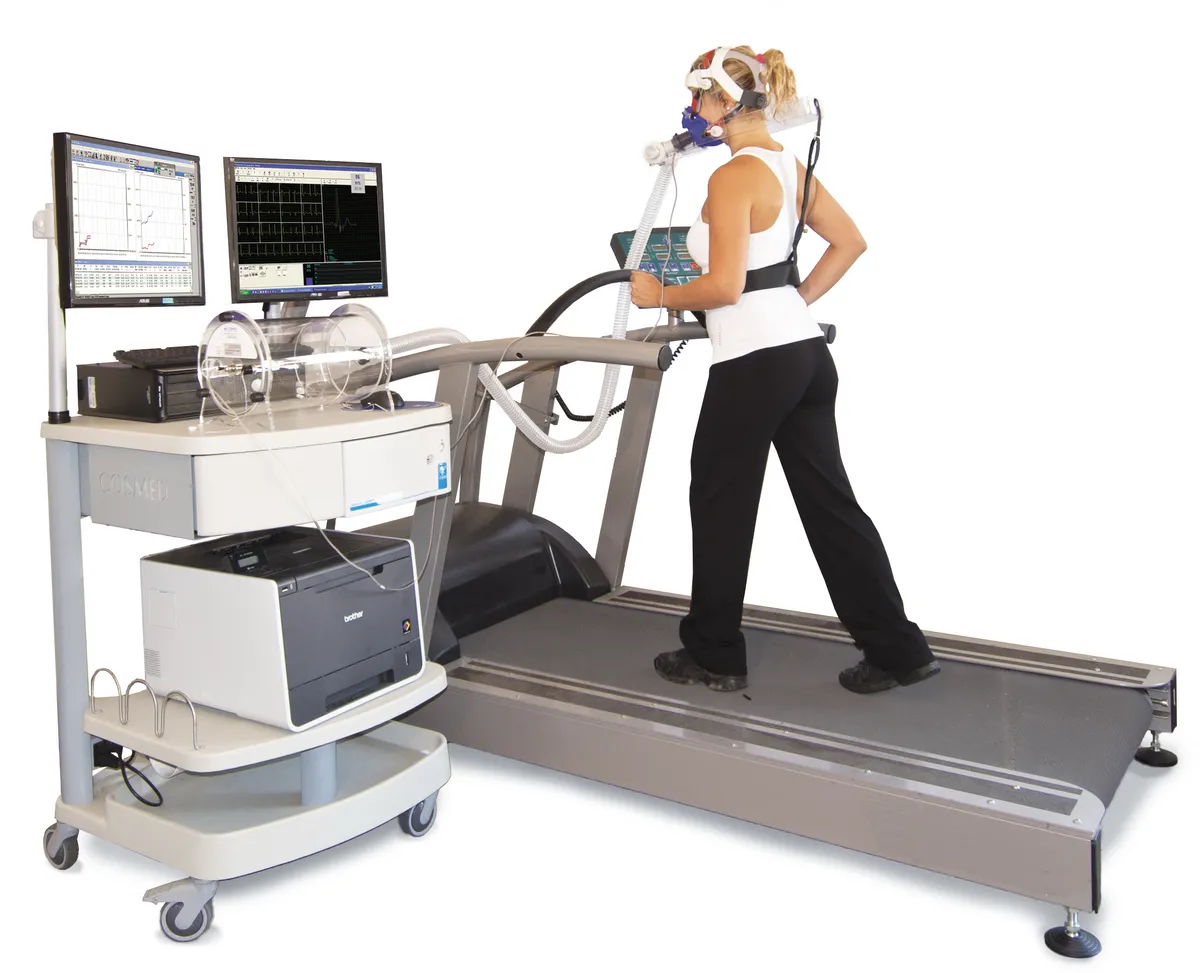

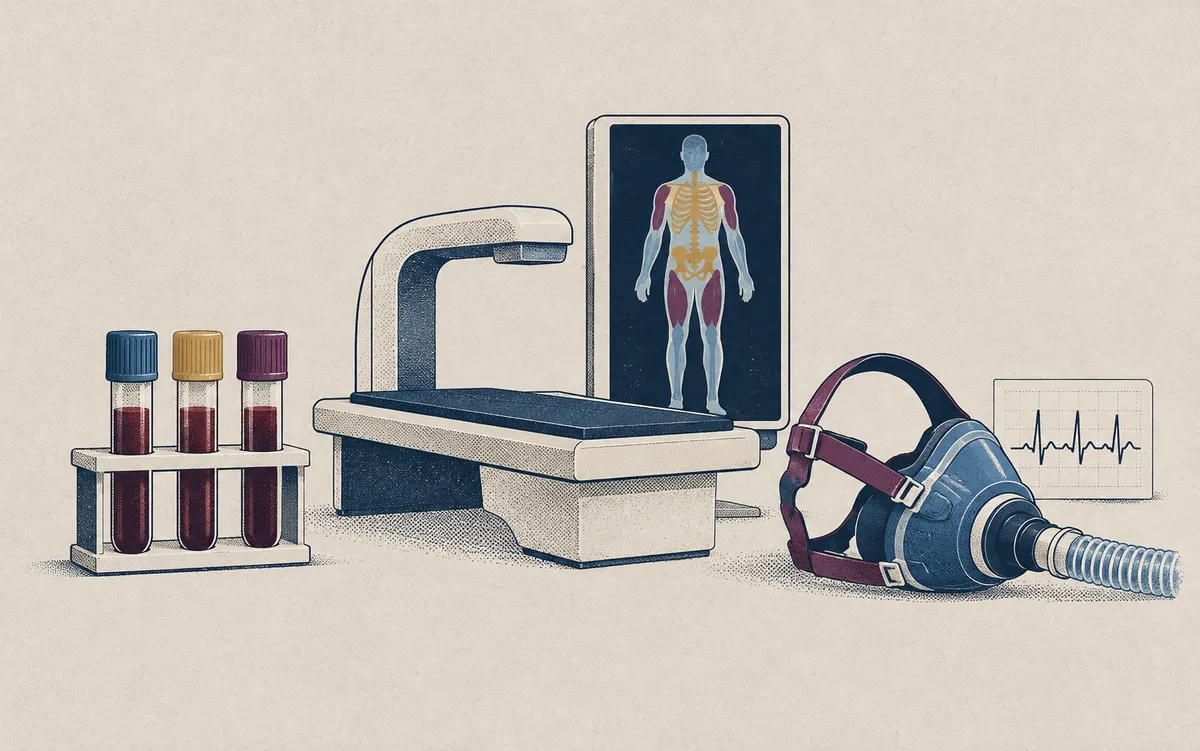
Tests are getting cheaper
Technology and competition are pulling prices down for some of the headline tests. Ezra’s full-body MRI cost $1,950 for an hour-long scan in 2019, $1,350 for a 30-minute scan in 2023, and $499 for Function Health members in 2025, after FDA-cleared AI image enhancement cut the scan to about 22 minutes. Function’s yearly membership for 160+ blood tests fell from $499 to $365 in November 2025, and Superpower lists $199 a year for 100+. A coronary calcium scan that cost $395 in 1998 is now under $100 in many US cities, with some hospitals charging $49.
| Test | Year | Price, US dollars |
|---|---|---|
| Full-body MRI (Ezra, list price) | 2019 | $1,950 |
| Full-body MRI (Ezra, list price) | 2023 | $1,350 |
| Full-body MRI (Ezra, list price) | 2025 | $499 |
| Heart calcium scan (Self-pay price) | 1998 | $395 |
| Heart calcium scan (Self-pay price) | 2018 | under $100 |
| Heart calcium scan (Self-pay price) | 2025 | $49 |
| Blood test membership (Function Health, per year) | 2024 | $499 |
| Blood test membership (Function Health, per year) | 2025 | $365 |
Sources: TechCrunch (2019), Radiology Business (2023) and CNBC (2025) for Ezra, where the 2025 price is for Function Health members after Function bought Ezra; Clinician.com (1998), Cleveland Clinic Journal of Medicine (2018) and Rush (2025) for calcium scans; Fierce Healthcare (2024, 2025) for Function. Advertised prices from one provider or the lowest found, not averages.
longevityclinicshub.comNot everything is falling. Prenuvo’s whole-body scan is still $2,499, as it was in 2023. DEXA body scans haven’t followed either: at the 32 clinics we track that publish a price, a DEXA scan costs $65 to $249, typically about $140, and we found no good record showing that has dropped. And much of the fall in calcium scan prices came before the longevity boom: hospitals were already running $49 promotions in 2013.
The money is following
Investment into longevity companies more than doubled from 2023 to 2024, to $8.5 billion, according to Longevity.Technology. Some of the best-known names in tech and business are among the backers.
| Year | Billions of US dollars |
|---|---|
| 2020 | 3 |
| 2021 | 6.2 |
| 2022 | 5.2 |
| 2023 | 3.82 |
| 2024 | 8.49 |
Source: Longevity.Technology annual investment reports. Its 2025 figure uses a different method and is not shown.
longevityclinicshub.com| Company | What happened | When |
|---|---|---|
| Altos Labs | Launched with $3 billion to research cell rejuvenation, reported to be backed by Jeff Bezos and Yuri Milner | Jan 2022 |
| Retro Biosciences | OpenAI CEO Sam Altman put in $180 million, the company’s entire first round | Jan 2025 |
| NewLimit | Co-founded by Coinbase CEO Brian Armstrong. Raised $435 million at about $3.1 billion, according to STAT, led by Peter Thiel’s Founders Fund | Jun 2026 |
| Neko Health | Co-founded by Spotify’s Daniel Ek. Raised $700 million at nearly $7 billion, then opened its first US clinic in New York | Jul and Sep 2026 |
| Function Health | Raised $298 million at a $2.5 billion valuation, after buying full-body MRI company Ezra | Nov 2025 |
| Fountain Life | Co-founded by Tony Robbins. Raised $18 million in its Series B, about $108 million in total, with centers in Florida, Texas and New York | Aug 2025 |
| Hevolution Foundation | Saudi-funded nonprofit authorized to spend up to $1 billion a year on aging research. It had committed over $400 million by mid-2024 | 2022 to 2024 |
The science is speeding up
The research behind longevity care is growing much faster than science as a whole. From 2015 to 2025, studies on senolytics went from 13 to more than 1,600. Senolytics are drugs designed to clear out worn-out "zombie" cells, which build up as we age and inflame the tissue around them. Studies on epigenetic clocks, tests that estimate your body’s age from your DNA, went from 49 to 1,070, and studies on biological age from 269 to 2,222. Medical research overall grew about 1.5 times.
| Topic | Year | Studies |
|---|---|---|
| senolytic | 2010 | 0 |
| senolytic | 2011 | 0 |
| senolytic | 2012 | 0 |
| senolytic | 2013 | 2 |
| senolytic | 2014 | 4 |
| senolytic | 2015 | 13 |
| senolytic | 2016 | 53 |
| senolytic | 2017 | 94 |
| senolytic | 2018 | 190 |
| senolytic | 2019 | 290 |
| senolytic | 2020 | 552 |
| senolytic | 2021 | 751 |
| senolytic | 2022 | 880 |
| senolytic | 2023 | 976 |
| senolytic | 2024 | 1,147 |
| senolytic | 2025 | 1,620 |
| epigenetic clock | 2010 | 1 |
| epigenetic clock | 2011 | 3 |
| epigenetic clock | 2012 | 2 |
| epigenetic clock | 2013 | 2 |
| epigenetic clock | 2014 | 13 |
| epigenetic clock | 2015 | 49 |
| epigenetic clock | 2016 | 81 |
| epigenetic clock | 2017 | 145 |
| epigenetic clock | 2018 | 177 |
| epigenetic clock | 2019 | 243 |
| epigenetic clock | 2020 | 340 |
| epigenetic clock | 2021 | 473 |
| epigenetic clock | 2022 | 609 |
| epigenetic clock | 2023 | 691 |
| epigenetic clock | 2024 | 774 |
| epigenetic clock | 2025 | 1,070 |
| biological age | 2010 | 114 |
| biological age | 2011 | 108 |
| biological age | 2012 | 144 |
| biological age | 2013 | 210 |
| biological age | 2014 | 228 |
| biological age | 2015 | 269 |
| biological age | 2016 | 320 |
| biological age | 2017 | 426 |
| biological age | 2018 | 455 |
| biological age | 2019 | 581 |
| biological age | 2020 | 834 |
| biological age | 2021 | 1,081 |
| biological age | 2022 | 1,262 |
| biological age | 2023 | 1,344 |
| biological age | 2024 | 1,646 |
| biological age | 2025 | 2,222 |
| healthspan | 2010 | 46 |
| healthspan | 2011 | 83 |
| healthspan | 2012 | 116 |
| healthspan | 2013 | 144 |
| healthspan | 2014 | 177 |
| healthspan | 2015 | 192 |
| healthspan | 2016 | 272 |
| healthspan | 2017 | 333 |
| healthspan | 2018 | 320 |
| healthspan | 2019 | 396 |
| healthspan | 2020 | 579 |
| healthspan | 2021 | 678 |
| healthspan | 2022 | 686 |
| healthspan | 2023 | 682 |
| healthspan | 2024 | 772 |
| healthspan | 2025 | 1,183 |
| geroscience | 2010 | 5 |
| geroscience | 2011 | 10 |
| geroscience | 2012 | 12 |
| geroscience | 2013 | 13 |
| geroscience | 2014 | 20 |
| geroscience | 2015 | 24 |
| geroscience | 2016 | 90 |
| geroscience | 2017 | 157 |
| geroscience | 2018 | 149 |
| geroscience | 2019 | 191 |
| geroscience | 2020 | 331 |
| geroscience | 2021 | 515 |
| geroscience | 2022 | 539 |
| geroscience | 2023 | 598 |
| geroscience | 2024 | 869 |
| geroscience | 2025 | 991 |
| all PubMed records | 2010 | 824,353 |
| all PubMed records | 2011 | 877,268 |
| all PubMed records | 2012 | 943,583 |
| all PubMed records | 2013 | 997,274 |
| all PubMed records | 2014 | 1,045,031 |
| all PubMed records | 2015 | 1,090,515 |
| all PubMed records | 2016 | 1,117,449 |
| all PubMed records | 2017 | 1,128,649 |
| all PubMed records | 2018 | 1,173,565 |
| all PubMed records | 2019 | 1,230,870 |
| all PubMed records | 2020 | 1,404,461 |
| all PubMed records | 2021 | 1,559,776 |
| all PubMed records | 2022 | 1,576,923 |
| all PubMed records | 2023 | 1,498,052 |
| all PubMed records | 2024 | 1,538,549 |
| all PubMed records | 2025 | 1,676,297 |
Source: LongevityClinicsHub analysis of PubMed via Europe PMC.
longevityclinicshub.comMore of that research is moving into people. New clinical trials built around aging itself, using terms like biological age, senolytics or healthspan (the years you live in good health), rose from 8 in 2015 to 71 in 2025.
| Series | Start year | New trials |
|---|---|---|
| trials using aging-biology terms | 2015 | 8 |
| all registered trials | 2015 | 24,441 |
| trials using aging-biology terms | 2016 | 11 |
| all registered trials | 2016 | 26,511 |
| trials using aging-biology terms | 2017 | 9 |
| all registered trials | 2017 | 27,986 |
| trials using aging-biology terms | 2018 | 13 |
| all registered trials | 2018 | 30,222 |
| trials using aging-biology terms | 2019 | 15 |
| all registered trials | 2019 | 32,016 |
| trials using aging-biology terms | 2020 | 26 |
| all registered trials | 2020 | 33,624 |
| trials using aging-biology terms | 2021 | 43 |
| all registered trials | 2021 | 38,579 |
| trials using aging-biology terms | 2022 | 50 |
| all registered trials | 2022 | 37,719 |
| trials using aging-biology terms | 2023 | 51 |
| all registered trials | 2023 | 39,364 |
| trials using aging-biology terms | 2024 | 47 |
| all registered trials | 2024 | 40,693 |
| trials using aging-biology terms | 2025 | 71 |
| all registered trials | 2025 | 40,219 |
Source: LongevityClinicsHub analysis of ClinicalTrials.gov by start year.
longevityclinicshub.comAI is speeding up the research
Artificial intelligence is starting to compress the slowest parts of drug discovery. A few examples:
- An AI-designed drug for an age-related disease reached late-stage trials. Insilico Medicine used AI to find both the target and the molecule for rentosertib, a drug for lung scarring that its researchers call an age-related disease. It went from target to drug candidate in about 18 months, showed improved lung function in a 71-patient trial published in Nature Medicine in 2025, and began a 320-patient Phase 3 trial in July 2026.
- AI redesigned the proteins used to rejuvenate cells. OpenAI and Retro Biosciences reported in 2025 that AI-designed versions of two "reprogramming" proteins worked more than 50 times better in lab tests than the natural versions. The work has not yet been peer-reviewed.
- Old livers acting younger, in mice. NewLimit, the company co-founded by Coinbase’s Brian Armstrong, reported in July 2026 that old mice normally sleep for hours after drinking alcohol, while old mice given its liver "reprogramming" treatment behaved more like young mice. It is a company update without published numbers yet. NewLimit plans its first human trial in 2027.
- AI found new drugs that clear worn-out cells. Researchers at MIT and Integrated Biosciences used AI to screen more than 800,000 molecules and found three new compounds that clear worn-out cells, one of which worked in aged mice (Nature Aging, 2023).
- Years of lab work in months. Harvard geneticist David Sinclair said on The Joe Rogan Experience in August 2026 that an AI-powered screen his team ran "in a couple of months would have taken about 160 years to complete." That is his own estimate, and the work has not been published yet.
AlphaFold, the AI system whose creators shared the 2024 Nobel Prize in Chemistry, has predicted the shapes of about 200 million proteins, compared with about 190,000 solved by lab methods over 60 years. Much of this new work builds on that foundation.
Public funding has grown too. The National Institute on Aging’s budget roughly quadrupled from 2010 to 2025; over the same years, Congress added dedicated funding for Alzheimer’s research.
| Fiscal year | Billions of US dollars |
|---|---|
| FY2010 | 1.11 |
| FY2012 | 1.1 |
| FY2014 | 1.17 |
| FY2016 | 1.6 |
| FY2018 | 2.57 |
| FY2020 | 3.54 |
| FY2022 | 4.22 |
| FY2024 | 4.51 |
| FY2026 | 4.53 |
Source: NIH Office of Budget appropriations history; FY2026 NIH operating plan. Not adjusted for inflation.
longevityclinicshub.comMilestones in aging science
- 2009Rapamycin becomes the first drug shown to extend lifespan in mammals, even when started late in life in mice
- 2013Scientists publish the first "epigenetic clocks" and the "Hallmarks of Aging", which becomes the field’s map
- 2015The first senolytic drugs are named: compounds that clear worn-out "zombie" cells
- 2016Brief genetic "reprogramming" reverses signs of aging in mice
- 2018 to 2022Newer clocks (PhenoAge, GrimAge, DunedinPACE) predict health and the pace of aging, not just birthdays
- 2022Altos Labs launches with $3 billion
- 2023Blood tests estimate the age of 11 organs separately. The "Hallmarks" grow from 9 to 12. The $101 million XPRIZE Healthspan launches
- 2026The US government’s ARPA-H awards up to $144 million to seven "healthspan" teams. XPRIZE names 20 finalists. A dog longevity drug has cleared 2 of the 3 technical sections the FDA requires for conditional approval
Beyond the clinic
The same demand shows up well outside longevity clinics:
- Wearables. Oura says it has sold more than 5.5 million rings since 2015, over half of them in the year to September 2025, and that revenue topped $500 million in 2024, double the year before.
- Employers. 43% of US employers with 5,000 or more workers covered GLP-1 drugs for weight loss in 2025, up from 28% in 2024 (KFF). Life insurer John Hancock began offering eligible customers $500 off a Prenuvo full-body MRI in 2024.
- Doctors. More than 8,000 healthcare practitioners attended a single longevity medicine conference in Las Vegas in 2024 (A4M). A lifestyle medicine curriculum is now available to 368 residency programs (American College of Lifestyle Medicine, 2024).
What hasn’t changed
For all the momentum, aging itself is still not a recognized medical condition. The FDA has never approved a drug to treat aging, and no measure of biological age is accepted as proof that a treatment works. The largest planned human trial of an aging drug, TAME, was designed in 2016 and still had not started by 2026. Many services offered at longevity clinics are early-stage, and longevity care works best alongside your regular doctor, not instead of them.
The business is harder than the headlines suggest. In a 2025 survey of 82 longevity clinics worldwide, 77% planned to expand, but only 39% said they were profitable (Longevity.Technology). Medical groups are also cautious: the American College of Radiology says there is not enough evidence to recommend full-body MRI screening for people without symptoms or risk factors. And regulators are watching. In 2026 the FDA warned a supplier after three patients were sent to the emergency room following compounded NAD+ from a single vial, and it has flagged dosing errors of 5 to 20 times the intended amount with compounded semaglutide.
Enter your ZIP code to see clinics in your area.
About this data
Clinic openings. We researched 237 clinics in seven metros, in October 2026. For each one we looked for the state business registration, the clinic’s own stated founding year and news coverage, and recorded a confidence level. We use the year a location opened, never the year its brand was founded. We count 111 clinics with high or medium confidence. We only see clinics open today; clinics that opened and closed earlier are missing, which can make recent growth look larger. Dating was easier in some states than others. California business records were looked up by hand in October 2026, and some LA and SF clinics, mostly chain locations, still have no solid date.
Search interest is from Google Trends (US), where each term is scaled to its own peak. News counts are from the GDELT Project. Studies are counts of PubMed records by year via Europe PMC. Trials are keyword counts on ClinicalTrials.gov by start year. Investment and company figures are from the sources linked.
Directory figures (the 903 clinics, 40 metros, the services chart and the DEXA price) are computed from our directory each time the page is built. Directory figures as of November 2026. Hand-researched facts keep their own dates.
Download: clinic opening data (CSV) · all chart data (CSV)
Cite or share this page
You’re welcome to use these charts and data. They’re free to use with a link back to this page.
LongevityClinicsHub, "The rise of longevity care in America, in numbers," October 2026, longevityclinicshub.com/learn/rise-of-longevity-care/ Prepared by the LongevityClinicsHub editorial team. How we research and source these guides.
Sources
Americans are looking for it
- Google Trends, Search interest, United States, monthly (our pull, one term per request)
- GDELT Project, DOC 2.0 API, US news articles by year (news counts, our pull)
- SSRS for Pew Research Center, On average, Americans want to live until they’re 91 (2025 survey of 8,750 US adults)
- McKinsey & Company, Future of Wellness survey, 2025
- Penguin, Outlive, by Peter Attia (bestseller status and copies sold, per the publisher)
- Wikipedia, citing Netflix, Don’t Die: The Man Who Wants to Live Forever
- Apple Newsroom, Apple Podcasts unveils the most popular shows and trends of 2025
- Associated Press, via WIBW, Peter Attia resigns CBS News post (criticism and reporting)
- New York Times, via Salt Lake Tribune, Bryan Johnson’s efforts not to die (criticism and reporting)
- Wikipedia, summarizing New York magazine, Andrew Huberman (criticism and reporting)
- US Census Bureau, Vintage 2024 population estimates by age, press release
Clinics are opening fast
- Restore Hyper Wellness, via Business Wire, Press release, June 24, 2020 (21 locations in May 2019)
- Restore Hyper Wellness, via Business Wire, Restore Hyper Wellness rings Nasdaq opening bell (225+ locations, January 2024)
- Restore Hyper Wellness, via Business Wire, Press release, January 16, 2025 (220+ locations)
- Athletech News, Next Health nears 20th clinic as longevity boom fuels expansion
- Athletech News, Next Health eyes 150 longevity clinics by 2027
- Neko Health, via PR Newswire, Neko Health opens its doors in New York
- Axios, Spotify founder’s Neko Health raises Series B
- Fitt Insider, Prenuvo $120M Series B
Big-name hospitals
- STAT, Longevity clinics are the buzzy new trend at nonprofit hospitals
- Northwestern Medicine, Human Longevity Clinic
- Northwestern Medicine, Do you really know your age? Northwestern Medicine’s new longevity clinic
- Cedars-Sinai, Cedars-Sinai launches healthy aging clinic
- Weill Cornell Medicine, Longevity Medicine Program
- Weill Cornell Medicine, Longevity Medicine Program, frequently asked questions
- Mayo Clinic, Pamila K. Brar, M.D.
- Mount Sinai, Healthspan Membership
- Mount Sinai, Performance360
- Hackensack Meridian Health, Hackensack University Medical Center opens frailty clinic and lifestyle clinic
- St. Bernards Healthcare, St. Bernards Longevity Center
- Vail-Beaver Creek Magazine, Vail Health Healthspan
- Mayo Clinic, Executive Health Program
- Cleveland Clinic, Executive Health Exams
- Mass General Brigham, Executive Health
Tests are getting cheaper
- TechCrunch, Ezra launches full-body cancer screens (2019 price)
- Radiology Business, Whole-body MRI startup Ezra scores FDA clearance for AI (2023 prices for Ezra and Prenuvo)
- CNBC, via NBC New York, Function Health buys Ezra, launches full-body scan for a third of the price (2025 price and scan time)
- Fierce Healthcare, Startup pockets $53M for personalized health testing (Function, 2024)
- Fierce Healthcare, Function Health lands $298M Series B (Function, November 2025)
- Superpower, Baseline membership
- Clinician.com, This tool scores calcification for AMI (1998 price)
- Cleveland Clinic Journal of Medicine, Volume 85, issue 9 (2018 prices)
- Rush, Heart scan
- GoodRx, Coronary artery calcium scan cost (2025 prices)
- Current, $49 heart scans offered (2013 promotion)
- Prenuvo, Pricing
The money is following
- Longevity.Technology, via Lifespan.io, Longevity investment more than doubled to $8.5bn in 2024
- Longevity.Technology, via PR Newswire, Longevity investment hits $5.2bn globally in 2022 (2020 to 2022)
- Longevity.Technology, Longevity biotech investment 2026 (the 2025 figure and its method)
- STAT, With $3 billion, biotech veterans launch a global company aimed at disease reversal
- The Pharma Letter, Altos Labs launches with $3B financing
- TechCrunch, Sam Altman and Retro Biosciences
- STAT, Longevity startup NewLimit announces $435 million clinical trial financing
- HIT Consultant, Neko Health raises $700 million Series C
- HLTH, Function Health raises $298M Series B at $2.5B valuation
- BeautyMatter, Fountain Life secures $18 million in Series B funding
- MIT Technology Review, Saudi Arabia plans to spend $1 billion a year on slowing aging
- Hevolution Foundation, via Newswise, Hevolution Foundation transforming healthspan science with $400M funding surge
The science is speeding up
- Europe PMC, REST search service, PubMed records by publication year (study counts, our analysis)
- ClinicalTrials.gov, API v2, studies by start year (trial counts, our analysis)
- Nature Medicine, Xu et al., rentosertib Phase 2a trial (2025)
- GeneOnline, Rentosertib advances into Phase III trial
- OpenAI, Accelerating life sciences research with Retro Biosciences
- NewLimit, 2026 May and June progress update
- NewLimit, NewLimit raises $435M led by Founders Fund (first human trial plans)
- Nature Aging, Wong et al., AI-discovered senolytics (2023)
- HappyScribe, The Joe Rogan Experience #2537, David Sinclair (transcript)
- EMBL, AlphaFold wins Nobel Prize in Chemistry 2024
- NIH Office of Budget, Appropriations history by institute, FY2010 to FY2019
- NIH Office of Budget, Appropriations history by institute, FY2020 to FY2025
- NIH Office of Budget, Operating plan for FY2026
Milestones in aging science
- Nature, Harrison et al., Rapamycin fed late in life extends lifespan in genetically heterogeneous mice (2009)
- Molecular Cell, Hannum et al., Genome-wide methylation profiles reveal quantitative views of human aging rates (2013)
- Genome Biology, Horvath, DNA methylation age of human tissues and cell types (2013)
- Cell, López-Otín et al., The Hallmarks of Aging (2013)
- Aging Cell, Zhu et al., The Achilles’ heel of senescent cells (2015)
- Cell, Ocampo et al., In vivo amelioration of age-associated hallmarks by partial reprogramming (2016)
- Aging, Levine et al., PhenoAge (2018)
- Aging, Lu et al., GrimAge (2019)
- eLife, Belsky et al., DunedinPACE (2022)
- Nature, Oh et al., Organ aging signatures in the plasma proteome (2023)
- Cell, López-Otín et al., Hallmarks of aging: an expanding universe (2023)
- XPRIZE, $101 million XPRIZE Healthspan launch
- ARPA-H, Research teams add more healthy years to Americans’ lives as they age
- XPRIZE, 20 Healthspan finalist teams advance
- Loyal, LOY-002 Target Animal Safety announcement
Beyond the clinic
- Oura, via Business Wire, Oura surpasses 5.5 million rings sold and doubles revenue
- KFF, 2025 Employer Health Benefits Survey, summary of findings
- Prenuvo, John Hancock access to Prenuvo whole-body MRI scans
- A4M, Uncovered at LongevityFest 2024
- American College of Lifestyle Medicine, Residency curriculum expands nationwide
What hasn’t changed
- Reagan-Udall Foundation for the FDA, Affecting the Aging Trajectory, public meeting summary
- American Federation for Aging Research, NPR spotlights TAME Trial and AFAR scientific leadership (April 2024)
- Cell Metabolism, Barzilai et al., Metformin as a tool to target aging (2016) (the TAME design paper)
- Longevity.Technology, Longevity clinics global survey reveals variation and ambition
- American College of Radiology, ACR statement on screening total body MRI
- FDA, Warning letter, GenoGenix LLC
- FDA, FDA alerts health care providers, compounders and patients of dosing errors associated with compounded semaglutide
This guide is independent editorial content, written to orient, not to diagnose. It is not medical advice, and it is no substitute for a conversation with a licensed physician who knows your history. Where we describe what clinics claim, the claim belongs to the clinic.
Educational reading, not medical advice. Talk to a clinician about your own health.