Full-body MRI vs blood biomarkers: what does each actually show?
MRI and blood testing look at different layers of the body. MRI creates pictures of physical structure. Blood tests measure selected cells and chemicals in a sample. One cannot replace the other, and neither can prove that you are free of disease.
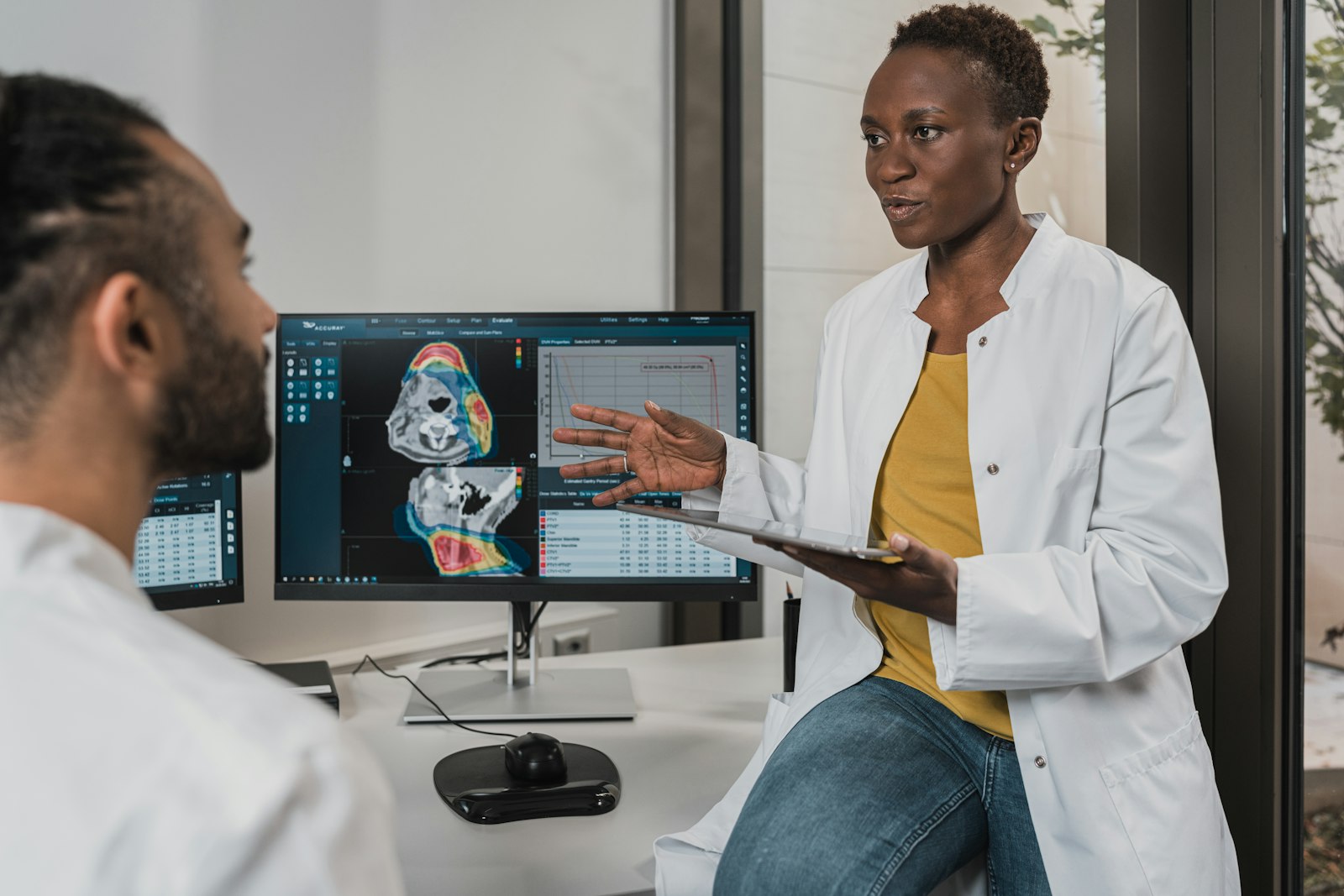
- Think of a house: MRI inspects the rooms and walls, bloodwork samples the water in the pipes. A clean water sample does not prove the walls are sound, and a tidy room says nothing about the chemistry.
- A commercial full-body MRI is not a standardized exam. Regions covered, sequences, contrast and interpretation vary widely between providers, so compare protocols, not brand names.
- The American College of Radiology stated in 2023 that evidence does not support total-body screening MRI for people without symptoms or risk factors, largely because of nonspecific findings and follow-up costs. That is a caution, not a prohibition.
- "Which is more comprehensive?" cannot be answered until you say comprehensive for what question. Combining them adds information, not certainty.
An MRI and a blood panel are usually presented as rival purchases, as though one were the thorough version of the other. They are not the same kind of test. One photographs structure, the other samples chemistry, and a body can look unremarkable in pictures while its chemistry is drifting, or the reverse. So the useful comparison is not "which wins" but "what does each see, what does each miss, and what happens after a finding."
What a full-body MRI is designed to examine
MRI uses a strong magnetic field, radiofrequency energy and computer processing to build detailed images, and it is especially good at distinguishing soft tissues. Unlike CT and X-rays, it uses no ionizing radiation.
The catch is standardization. A commercial "full-body MRI" is not a standardized exam. Coverage, sequences, scan time, contrast use, interpretation and exclusions all vary by provider. Some programs include the brain; some do not. Some add a separate heart or vascular study. Screening protocols for people without symptoms are also different from targeted diagnostic MRI ordered to answer a specific clinical question.
When two clinics quote you "a full-body scan," you may be comparing two quite different products. Ask for the protocol, not the brand name.
What blood biomarkers are designed to measure
Blood tests analyze a sample for selected cells, molecules and calculated estimates: lipids, glucose regulation, blood counts, liver and kidney markers, hormones, nutrients, inflammation signals, and sometimes algorithmic scores sold as add-ons. Bloodwork is dynamic: values shift with meals, illness, sleep, exercise and collection conditions. It can surface early biochemical signals, but it draws no pictures. Our biomarker guide decodes the typical panel group by group.
Incidental findings, and what the radiologists say
Screening an asymptomatic person can uncover findings that eventually prove harmless but still require old records, another scan, specialist review or even a procedure to reach that conclusion.
The American College of Radiology said it did not believe there was sufficient evidence to recommend total-body screening MRI for people without symptoms, relevant risk factors or family history, citing nonspecific findings, follow-up procedures and expense. That is a caution, not a prohibition.
That does not mean no individual should ever choose the scan. It means the benefit for broad asymptomatic screening has not been established well enough for a general recommendation, and that you should walk in knowing the follow-up question matters more than the scan itself.
Side by side
| Full-body MRI | Blood biomarker panel | |
|---|---|---|
| Main view | Physical structure and tissue characteristics | Circulating cells, molecules and calculations |
| Output | Images plus a radiology report | Numbers, reference ranges, sometimes scores |
| Ionizing radiation | None | None |
| Main limitations | Variable protocols, incidental findings, cost, access, MRI safety screening | Timing and biological variation, panel differences, false positives, no structural view |
| Who interprets it | A radiologist; someone still has to connect findings to your plan | The lab reports values; a clinician puts them in context |
| Typical follow-up | Targeted imaging, comparison, referral, or no action | Repeat testing, a related test, treatment, referral, or no action |
What each approach can miss
An MRI can miss things that are too small, outside the scanned area, poorly suited to the chosen sequences, or biochemical rather than structural. Bloodwork can look perfectly normal while a structural problem exists, and a broad panel is not a universal cancer screen: it only reports what was ordered and measurable in the sample. So the question people actually arrive with, "which is more comprehensive?", turns out to have no answer on its own terms.
Comprehensive for what question? Until that is settled, the comparison has nothing to stand on.
This is why some programs combine bloodwork, imaging, body composition and fitness testing into one baseline. Breadth has a real trade-off, though: the more places you look, the more likely you are to find something uncertain. A responsible program can tell you what each component adds, which findings have a standard follow-up path, who coordinates it, whether additional testing is included, and what the program does not screen for.
Safety and the practical questions
No radiation does not mean no considerations. The magnetic environment requires safety screening; implants and metal can affect eligibility. Scans are noisy and enclosed, and contrast agents, where used, carry their own considerations.
- Which body regions and sequences does the protocol cover, and is contrast used?
- Who reads the images, are they licensed in my state, and do I get the images as well as the report?
- If something is found, is the follow-up imaging included in the price or billed separately?
- Can you compare this against prior imaging, and who coordinates care if there is a finding?
Sources
Common questions
Can a full-body MRI detect cancer?
It may identify some suspicious structural findings, but it cannot detect every cancer and it does not replace recommended cancer screening. Performance depends on the cancer, its size and location, and the scan protocol. Any finding usually needs targeted follow-up to mean anything.
Does normal bloodwork mean an MRI is unnecessary?
No conclusion follows either way. Blood tests and imaging answer different questions: one is chemistry, the other is structure. Whether imaging is appropriate depends on symptoms, risk, history and clinician judgment, not on how the blood panel came back.
Does MRI use radiation?
MRI does not use ionizing radiation. It uses strong magnetic fields and radiofrequency energy, which is why it still requires safety screening for implants and metal.
Is a full-body MRI included in every longevity assessment?
No. Some clinics offer it only in a higher tier, through an imaging partner, or as a separate purchase. Others do not offer it at all. Check whether the advertised program price includes the scan, the radiologist read and any follow-up imaging.
Prepared by the LongevityClinicsHub editorial team. Evidence last checked August 2026. How we research and source these guides.
Enter your ZIP code and we'll point you at the nearest city we've researched.
This guide is independent editorial content, written to orient, not to diagnose. It is not medical advice, and it is no substitute for a conversation with a licensed physician who knows your history. Where we describe what clinics claim, the claim belongs to the clinic.
Educational reading, not medical advice. Talk to a clinician about your own health.