Dallas-Fort Worth clinics›Cancer-detection testing
Dallas-Fort Worth · Guide · Cancer-detection testing

Cancer detection tests in Dallas-Fort Worth

A blood test that looks for many cancers at once, plus the standard checks clinics offer alongside it. Here's what each one does, what it costs, and which Dallas-Fort Worth clinics offer them.

Main tests
A multi-cancer blood test Plus standard checks like mammograms and stool tests
What you do
A blood draw, a scan or a screen Whatever you agree on after a risk talk
You get
Results, explained A signal means more testing, not a diagnosis
Dallas photograph by Erin Hervey · Unsplash

The tests, in plain English

The newest test here is a blood draw that looks for signals from many cancers at once. A signal means more testing, not a diagnosis, and it doesn't replace your regular screenings. The same clinics also offer standard checks like mammograms and stool tests, which your own doctor may already arrange.

Think of a multi-cancer blood test like a smoke alarm for the whole house. When it goes off, you still have to search room by room to find the source, and sometimes there's nothing there.

Multi-cancer blood test

Looks in one blood draw for bits of DNA that cancer cells shed, and guesses where they came from. A signal needs scans and often a biopsy to confirm. No signal does not mean no cancer.

Inherited-risk gene panel

Checks genes you were born with that raise cancer risk. It does not look for cancer itself, but it can change when and how often you get screened. Talking to a genetic counselor before and after is normal.

Mammogram

An X-ray of the breast that finds cancer before it can be felt.

At-home stool test

A kit you mail back that checks for hidden blood or DNA changes linked to colon cancer. A positive result means a colonoscopy next.

Skin check

A doctor looks over your skin for unusual or changing spots. Experts say there is not enough evidence yet that routine checks help people without symptoms.

Cancer in Dallas-Fort Worth, by the numbers

The rate of past cancer diagnoses in Dallas-Fort Worth is lower than the national rate. About 1 in 17 adults in Dallas-Fort Worth have ever been diagnosed with cancer, other than common skin cancers, compared with about 1 in 13 nationally. That adds up to roughly 330,000 adults across six counties.

5.9%of adults in Dallas-Fort Worth have ever been diagnosed with cancer, other than common skin cancersUS: 7.8%
330,000adults in Dallas-Fort Worth have ever been diagnosed with cancer, other than common skin cancersEstimated from CDC county figures
4Dallas-Fort Worth clinics list cancer-detection testingSee them below
Dallas-Fort Worth vs the US
Share of each group named, 2022 and 2023.
Cancer (other than skin cancer)
Colorectal screening up to date (ages 45 to 75)
Mammogram in the past 2 years (women 50 to 74)
↓ Data
By county
CountyCancer (other than skin cancer)Colorectal screening up to date (ages 45 to 75)Mammogram in the past 2 years (women 50 to 74)
Dallas5.2%56.2%73.9%
Tarrant6.0%58.9%79.1%
Collin6.3%59.2%78.6%
Denton6.4%58.8%79.2%
Johnson7.1%57.6%73.7%
Parker8.3%65.7%72.6%
Dallas-Fort Worth5.9%58.1%76.9%
United States7.8%63.8%76.1%

Source: CDC PLACES, 2022 and 2023 county estimates. Dallas-Fort Worth = Dallas, Tarrant, Collin, Denton, Johnson and Parker counties, weighted by adult population.

longevityclinicshub.com

Your regular doctor can tell you which standard screenings are due for your age. Those come first, and the newer tests above are extras, not replacements.
Showing 4 clinics that publish cancer-detection testing in Dallas-Fort Worth

How we order clinics
Cooper Clinic clinic

Cooper Clinic

Preston Hollow
Cancer risk & screeningSkin, hair & aestheticsStrength, fitness & body composition

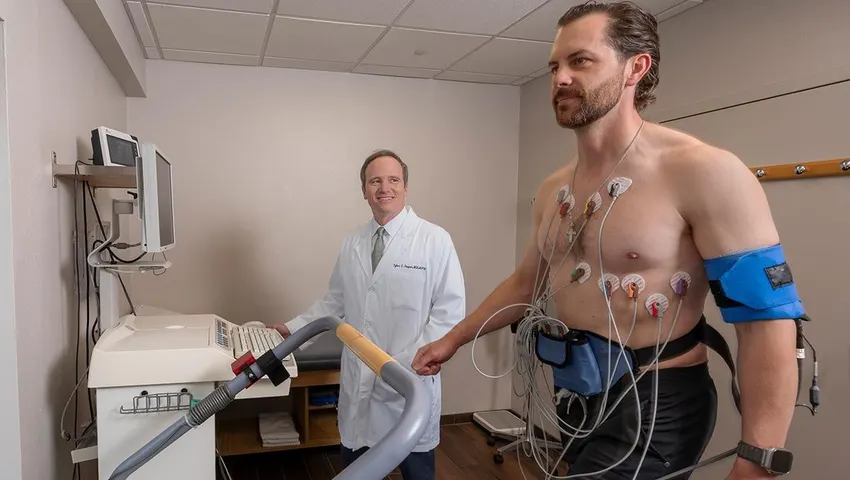
Cooper Clinic is a preventive medicine clinic in Preston Hollow, founded by Kenneth H. Cooper in 1970, with 31 named clinicians. Its one-day preventive physical delivers same-day results across six components, from laboratory analysis and cardiovascular screening to skin cancer screening. Platinum is the 24/7 concierge tier. People come here for a whole-body baseline and heart and cancer screening. Led by Kenneth H. Cooper, MD, Tyler C. Cooper, MD, Camron E. Nelson, MD and 27 more.

Tests & services

DEXA scan Botox & fillers Cardiac stress test Health & nutrition coaching +12 more
See if it’s a fit
Hartwater Wellness clinic

Hartwater Wellness

McKinney
Advanced diagnostics & emerging careWhole-body baselineGenetics & biological age

Hartwater Wellness is a physician-led longevity clinic in McKinney that starts with measurement: blood is drawn in house and run through Quest, across panels from biological age to cancer risk mapping. Treatment spans hormone pellets, peptides, GLP-1 weight loss, IV therapy and hyperbaric oxygen. People come here for a whole-body baseline, weight loss, and hormones and energy. Led by S. Bradley Burris, MD.

Tests & services

Biological age testing Comprehensive biomarker panel GLP-1 weight loss program Hormone panel +14 more
See if it’s a fit

Fountain Life Dallas

Grandscape, The Colony
Whole-body baselineAdvanced diagnostics & emerging careStrength, fitness & body composition

Fountain Life's Dallas-area centre sits in The Colony, on the Grandscape corridor north of the city, and sells an annual membership rather than single visits. The published evaluation is specific: full-body and brain MRI with AI, coronary CT angiography, low-dose lung CT, whole genome sequencing, DEXA, a 100-plus marker blood panel, epigenetic biological age and VO2 max. Members choose CORE, APEX or APEX Family. Led by William Kapp, MD, Dawn Mussallem, DO, Peter Diamandis, MD and 1 more.

Tests & services

Biological age testing Comprehensive biomarker panel Continuous glucose monitoring DEXA scan +18 more
See if it’s a fit

Paradigm Wellness Medical Group

W Northwest Hwy, Dallas
Advanced diagnostics & emerging careCancer risk & screeningEnvironmental exposures

Paradigm Wellness Medical Group is a Dallas regenerative medicine and aesthetics practice led by Dr. Joe Cleaver, offering injectables, PRP/PRF, PDO threads and a Precision Longevity 365 Program. The program's initial evaluation includes lab tests from Jinfiniti Labs and testing for environmental toxins such as heavy metals and pesticides. The page also lists Cancer Check, a blood test for circulating tumor cells.

Tests & services

Botox & fillers Environmental toxin panels Multi-cancer early detection blood test NAD+ therapy +2 more
See if it’s a fit

How a testing appointment usually goes

  1. A risk talk first

    Family history, past results, smoking, and any known gene findings. This decides which tests are worth doing.

  2. The testing

    Whatever you agreed on: a blood draw, a scan, or a screen you are due. Ask what is included and what costs extra.

  3. Results, explained

    What was looked for, what was not, and how sure the answer is. Ask who reads yours.

  4. What comes next

    A date to repeat, or a clear next step. Ask who arranges it and whether your doctor gets a copy.

A new lump, unexplained bleeding or weight loss needs a doctor visit soon. That's a job for your doctor, not a screening test.

Go deeper

Common questions

Which clinics in Dallas-Fort Worth publish cancer-detection testing?

4 in our Dallas-Fort Worth guide: Cooper Clinic, Hartwater Wellness, Fountain Life Dallas and Paradigm Wellness Medical Group.

Do I still need regular screening after a multi-cancer blood test?

Yes. These tests add to the screening recommended for your age, they don't replace it. A result with no signal doesn't mean you can skip a mammogram or colonoscopy you're due.

What happens if the blood test finds a signal?

It means more testing, not a diagnosis. Usually that's imaging, a specialist, and sometimes a biopsy, and it can take more than one round. Ask before you book who reviews a positive result and who arranges what comes next.

Is a gene panel the same as a multi-cancer blood test?

No. The blood test looks for cancer that may be there now. A gene panel reads genes you were born with and tells you if your risk is higher, which can change when your screening starts.

Which of these does my own doctor already do?

Often more than people expect. Mammograms, stool tests and skin checks are routine in primary care, so check what's already booked before buying a package. Our cancer screening guide shows how it all fits together.

What does this cost, and will insurance cover it?

Standard screens are usually covered by insurance. A multi-cancer blood test is usually self-pay. Our guides on cost and insurance go deeper.

How do you decide which clinics appear on this page?

A clinic appears here when its own published material shows it offers cancer-detection testing at that location.

Sources (7)
  1. National Cancer Institute, Questions and answers about multi-cancer detection tests
  2. U.S. Preventive Services Task Force, A and B recommendations
  3. U.S. Preventive Services Task Force, Breast Cancer: Screening
  4. U.S. Preventive Services Task Force, Colorectal Cancer: Screening
  5. U.S. Preventive Services Task Force, Skin Cancer: Screening
  6. National Cancer Institute, Genetic Testing for Inherited Cancer Risk
  7. National Cancer Institute, Cancer Screening Overview (PDQ) for patients

This page is educational information, not medical advice, and it is not a recommendation to have or to skip any test. Which of these is useful for you depends on your age, your family history and your personal risk, so discuss it with a clinician who knows your history. If you have a symptom that concerns you, seek a medical evaluation rather than a screening test.

More healthy years, for you and your family

One short email a week, with plain-English ideas from longevity science that you can actually use.

Free. Unsubscribe anytime.