Washington, DC-Bethesda clinics›Brain and cognitive assessment
Washington, DC-Bethesda · Guide · Brain and memory testing

Brain and memory testing in Washington, DC-Bethesda

Brain scans and memory tests that record where you stand now, so future changes have something to compare against. Here's what they can tell you and which Washington, DC-Bethesda clinics offer them.

Main tests
A brain MRI and memory tests Brain areas compared with people your age
What you do
A scan, memory tests, or both After a talk about sleep, mood and medicines
You get
A baseline to compare against later Or a referral if something stands out
Washington DC photograph by Harrison Mitchell · Unsplash

The tests, in plain English

Brain testing for healthy people is mostly about a baseline: a scan or memory test now, so a change later can be spotted. Experts say there isn't enough evidence to screen people without symptoms, and brain scans often find harmless spots. If you've noticed memory changes, see a doctor instead.

It's like taking a photo of your bookshelf before you move. On its own it doesn't tell you much. It helps later, when you want to know if anything changed.

Brain MRI with volumetrics

An MRI of the brain, with software that measures the size of brain areas and compares them with people your age. No radiation. It often finds small spots that turn out to be harmless.

Memory and thinking tests

Computer or paper tests of memory, attention and speed. Your sleep, stress and mood that day can change the score, so a retest uses the same test.

Brain health in Washington, DC-Bethesda, by the numbers

The rate of serious difficulty with memory or focus in Washington, DC-Bethesda is lower than the national rate. About 1 in 9 adults in Washington, DC-Bethesda have serious difficulty concentrating, remembering or making decisions, compared with about 1 in 7 nationally. That adds up to roughly 460,000 adults across six counties, the District of Columbia, the city of Alexandria, the city of Falls Church and the city of Fairfax.

11.3%of adults in Washington, DC-Bethesda have serious difficulty concentrating, remembering or making decisionsUS: 14.3%
460,000adults in Washington, DC-Bethesda have serious difficulty concentrating, remembering or making decisionsEstimated from CDC county figures
5Washington, DC-Bethesda clinics list brain and cognitive assessmentSee them below
Washington, DC-Bethesda does better than the US on all 3 measures
Share of adults, 2023. Lower is better.
Serious difficulty with memory or focus
Frequent mental distress
Depression
↓ Data
By area
AreaSerious difficulty with memory or focusFrequent mental distressDepression
Fairfax10.7%12.2%18.4%
Montgomery10.0%12.0%17.0%
Prince George's12.6%14.3%14.8%
District of Columbia12.0%14.1%21.6%
Prince William12.9%14.9%20.0%
Loudoun10.5%13.0%18.4%
Arlington10.2%13.4%21.2%
Alexandria (city)11.7%14.5%20.9%
Fairfax (city)11.7%13.8%19.5%
Falls Church (city)9.3%12.4%20.4%
Washington, DC-Bethesda11.3%13.2%18.3%
United States14.3%16.5%21.6%

Source: CDC PLACES, 2023 county estimates. Washington, DC-Bethesda = the District of Columbia, Montgomery, Prince George's, Fairfax, Loudoun, Arlington and Prince William counties, the city of Alexandria, the city of Falls Church and the city of Fairfax, weighted by adult population.

longevityclinicshub.com

If you've noticed changes in memory, focus or mood, start with your regular doctor. The tests above add detail, but they work best alongside that visit.
Showing 5 clinics that publish brain and cognitive assessment in Washington, DC-Bethesda

How we order clinics
Matthew L. Mintz, MD, FACPMadeline Taskier, MD

Matthew L. Mintz, MD, FACP

Executive Boulevard, Rockville
Brain & cognitionMidlife & menopause

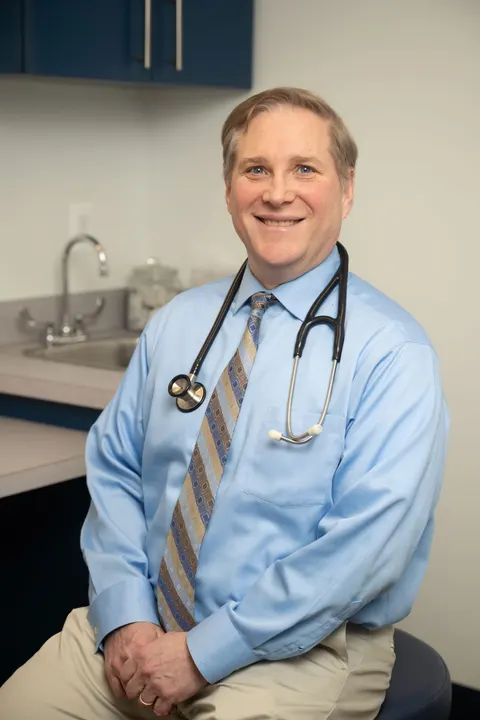
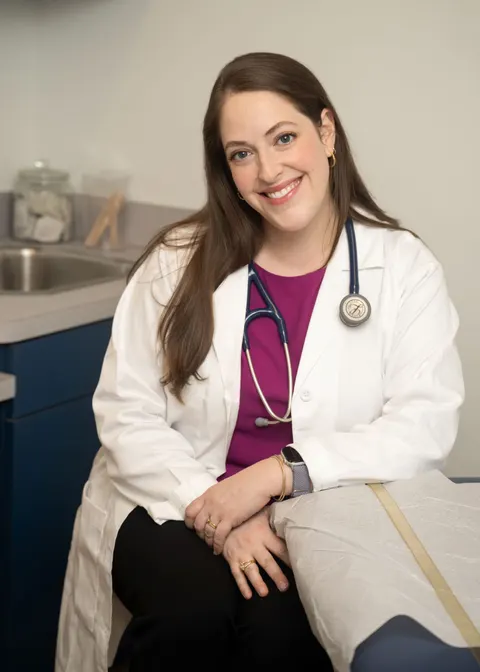
A concierge primary care practice in Rockville with board-certified internist Dr. Matthew Mintz and board-certified family medicine physician Dr. Madeline Taskier. The membership includes an annual physical, an EKG and blood work drawn in the office. Its cognitive health program begins with a Comprehensive Cognitive Health Assessment: lab analysis, brain MRI measurements, a home sleep study and cognitive testing. Led by Matthew L. Mintz, MD, Madeline Taskier, MD, Taisei Suzuki, DO.

Services

Brain MRI with volumetrics Longevity membership Menopause hormone therapy Sleep testing +2 more
See if it’s a fit
Lynese L. Lawson, D.O., ABAARM, IFMCPUzma Mian, MD, ABAARM

Proactive Wellness Centers Silver Spring

East-West Hwy, Silver Spring
Genetics & biological ageAdvanced diagnostics & emerging careBrain & cognition

Proactive Wellness Centers Silver Spring is a functional medicine and hormone-therapy clinic on East-West Highway, part of the Forum Health network, with a team led by Lynese L. Lawson, D.O. It offers bioidentical hormone and testosterone pellet therapy, semaglutide weight loss, peptides, IV therapy, nutrigenomic and pharmacogenomic testing, and a Bredesen protocol evaluation for cognitive decline. Led by Lynese L. Lawson, D.O., Uzma Mian, MD.

Services

GLP-1 weight loss program Hormone panel Peptide therapy Neurocognitive testing +5 more
See if it’s a fit
Prenuvo Washington, DC clinic

Prenuvo Washington, DC

Woodmont Avenue, Bethesda
Whole-body baselineAdvanced diagnostics & emerging careBrain & cognition

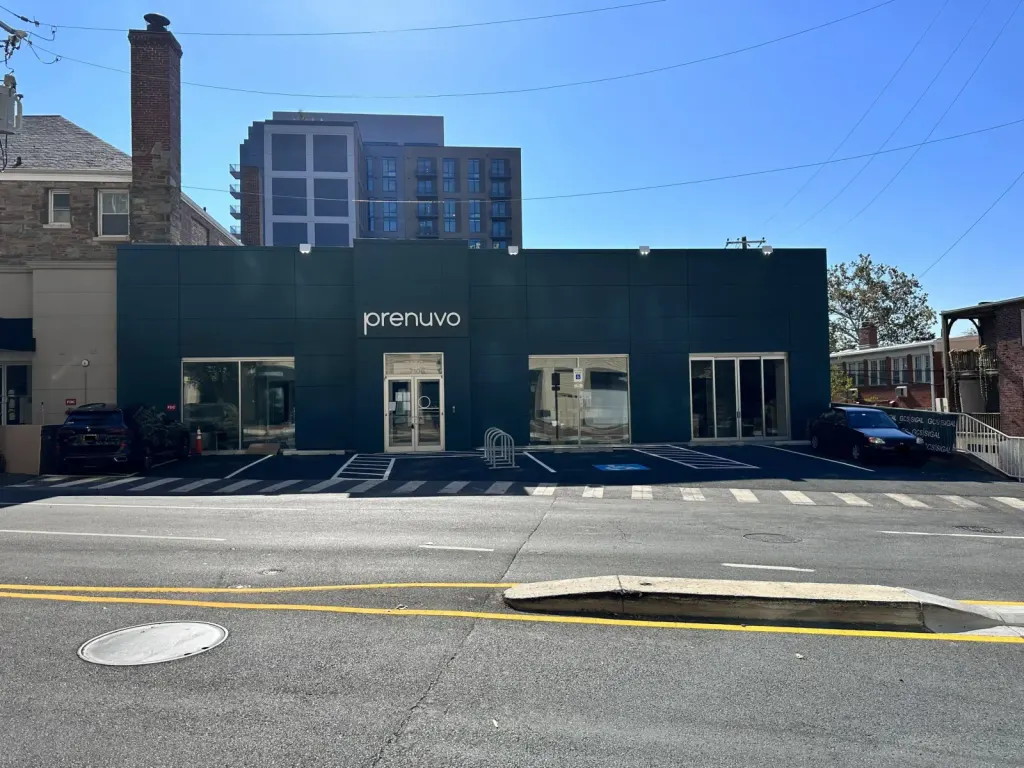
Prenuvo's Washington, DC clinic is at 7106 Woodmont Ave in Bethesda and is open Monday to Friday. The company publishes its Whole Body Scan as an MRI screening that evaluates major organs, the brain, spine and more in under an hour, and a shorter head-to-mid-thigh Focused Scan. Named blood panels and a Prenuvo Results Review sit alongside the imaging inside the annual memberships.

Services

Comprehensive biomarker panel Full-body MRI Brain MRI with volumetrics Environmental toxin panels
See if it’s a fit

HITx Regenerative Health - Rockville

S Washington St, Rockville
Advanced diagnostics & emerging careBrain & cognitionMen’s health & testosterone

HITx Regenerative Health - Rockville is a direct-pay clinic on S Washington St in downtown Rockville, the first HITx clinic, with a second office in Reston. It offers bioidentical hormone therapy for women, testosterone pellets and injections, peptide therapy, IV therapy including NAD+, and genetic testing. Care starts with bloodwork and an InBody body composition scan, and labs are retested as protocols change. Led by Ravi Dahiya, MD.

Services

Peptide therapy Bioimpedance body composition Genetic & genomic testing IV vitamin therapy +3 more
See if it’s a fit

Washington Radiology Washington DC

19th Street NW, Downtown DC
Heart & circulationStrength, fitness & body compositionCancer risk & screening

Washington Radiology's downtown DC center on 19th Street NW is an imaging practice. Its wellness imaging includes cardiac calcium scoring CT, lung screening CT, virtual colonoscopy, DXA bone density, liver elastography and NeuroQuant brain MRI, alongside general MRI, CT and ultrasound. Exams are booked with a written order from your physician.

Services

Coronary calcium score DEXA scan Brain MRI with volumetrics Low-dose lung CT +1 more
See if it’s a fit

How a brain check usually goes

  1. History first

    Sleep, mood, medicines, hearing and family history all affect memory.

  2. The testing

    A scan, a set of memory tests, or both. Ask what is included.

  3. Results, explained

    Ideally by a neurologist or neuropsychologist. Ask who reads yours.

  4. What comes next

    A date to retest, or a referral if something stands out.

If you or your family notice memory loss, getting lost, or personality changes, see your doctor. That's not a job for a screening package.

Go deeper

Common questions

Which clinics in Washington, DC-Bethesda publish brain and cognitive assessment?

5 in our Washington, DC-Bethesda guide: Matthew L. Mintz (MD, FACP), Proactive Wellness Centers Silver Spring, Prenuvo Washington (DC), HITx Regenerative Health - Rockville and Washington Radiology Washington DC.

Can a brain scan show if I'll get dementia?

No. It can show shrinkage or other changes, but on its own it can't predict whether one person will develop dementia.

What if the MRI finds something?

Brain scans in healthy people often find small things, and most are harmless. Some need a follow-up scan. Ask before you book who reviews findings and who arranges next steps.

Is a memory test useful if I feel fine?

Mostly as a baseline. A score today means more when you can compare it with a score a few years from now.

Does sleep or stress affect the results?

Yes. Poor sleep, stress, low mood and some medicines can lower memory scores. Mention them, and try to test on a normal day.

What does it cost, and will insurance cover it?

Testing without symptoms is usually self-pay. Insurance is more likely to cover it when a doctor orders it for a symptom. Our guides on cost and insurance go deeper.

How do you decide which clinics appear on this page?

A clinic appears here when its own published material shows it offers this kind of testing at that location.

Sources (3)
  1. U.S. Preventive Services Task Force, Cognitive impairment in older adults: screening
  2. Morris et al., Incidental findings on brain magnetic resonance imaging: systematic review and meta-analysis (BMJ, 2009)
  3. National Institute of Biomedical Imaging and Bioengineering, Magnetic Resonance Imaging

This page is educational information, not medical advice, and it is not a recommendation to have or to skip any test. What is right for you depends on your age, your history and your personal risk, so discuss it with a clinician who knows them. If you have a symptom that concerns you, seek a medical evaluation.

More healthy years, for you and your family

One short email a week, with plain-English ideas from longevity science that you can actually use.

Free. Unsubscribe anytime.