Start with your regular doctor and a thyroid test, because an underactive thyroid is one treatable cause of tiredness. A blood count can check for anemia, a shortage of healthy red blood cells. Testosterone, menopause hormones and cortisol, made by your adrenal glands, are worth testing when your symptoms point to them, not as a routine screen.
The tests, in plain English
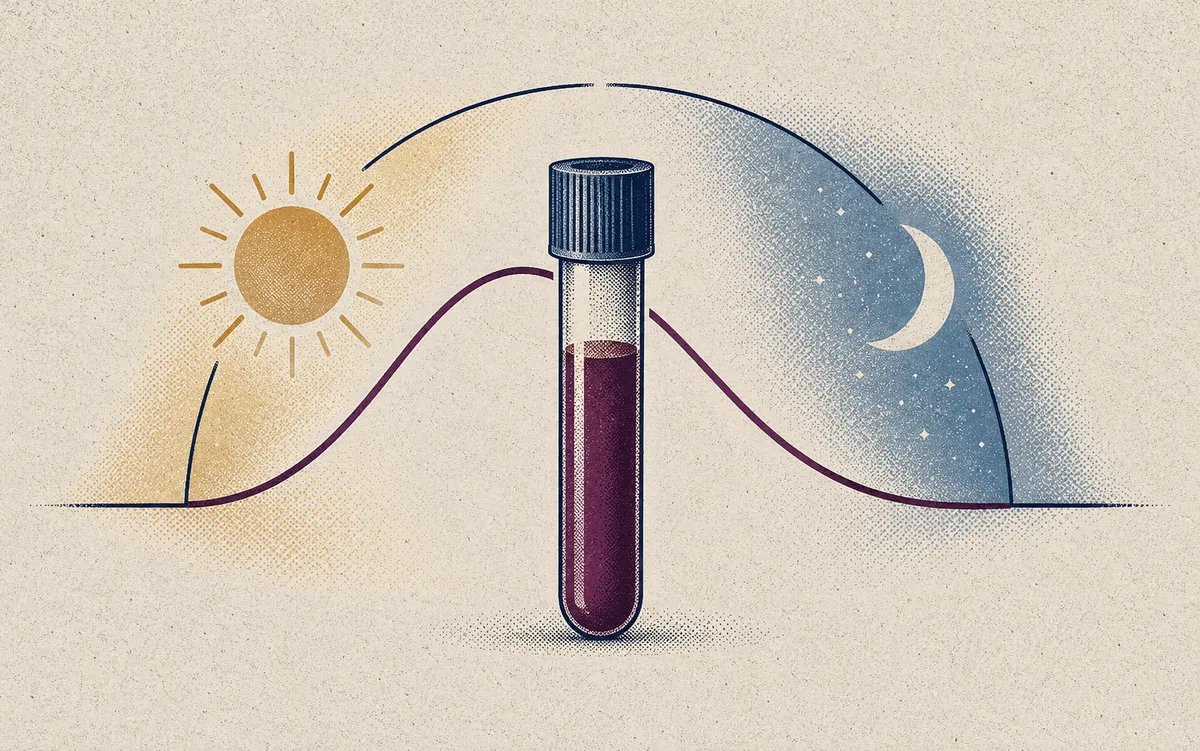
Think of hormones as messages your body sends through the mail. A blood test is a snapshot of what's in the mailbox at one moment, and some of these messages arrive in waves through the day or the month. That's why when you test can matter as much as what you test.
Thyroid (TSH)
Usually the first thyroid test. TSH, thyroid stimulating hormone, is the signal a small gland in your brain sends to push your thyroid. A high level often means an underactive thyroid, which can bring tiredness, weight gain, feeling cold and low mood.
For: Anyone with tiredness or weight change that has no clear causeFree T4 and thyroid antibodies
Free T4 measures the thyroid hormone itself. Antibody tests look for your immune system attacking the thyroid, which is Hashimoto's disease, the most common cause of an underactive thyroid. Doctors usually add these when TSH comes back off.
For: Usually when TSH is outside the normal rangeTestosterone
Levels are highest in the morning, so the test is done early, after fasting, and repeated before anyone calls it low. In men, low levels can bring a low sex drive, erection problems and loss of muscle.
For: Men with symptoms, not as a routine screenFSH and estradiol
FSH, follicle stimulating hormone, changes through the monthly cycle, and estradiol is the main estrogen before menopause. Both shift a lot during the menopause transition. After 45, menopause is usually recognized from your symptoms and periods, and a blood test often adds little.
For: Women under 45 with changing periods, or when the picture is unclearCortisol
Made by your adrenal glands, cortisol affects almost every organ in your body. It rises and falls through the day, highest in the morning, so timing matters. Doctors use it to look for adrenal conditions where the glands make too much or too little.
For: When a doctor suspects an adrenal problemBlood count and iron
Not hormones, but often checked alongside them. A complete blood count looks for anemia, when your blood has fewer healthy red blood cells than normal, and a ferritin test checks your iron stores. Anemia is one non-hormone reason for feeling tired or weak.
For: Anyone with tiredness that has lasted weeksSaliva and urine hormone panels
Some clinics measure hormones in saliva or dried urine instead of blood. Menopause specialists have called saliva testing unreliable for guiding treatment. Before paying for either kind of panel, ask what a result would change.
For: Ask first what the result would change